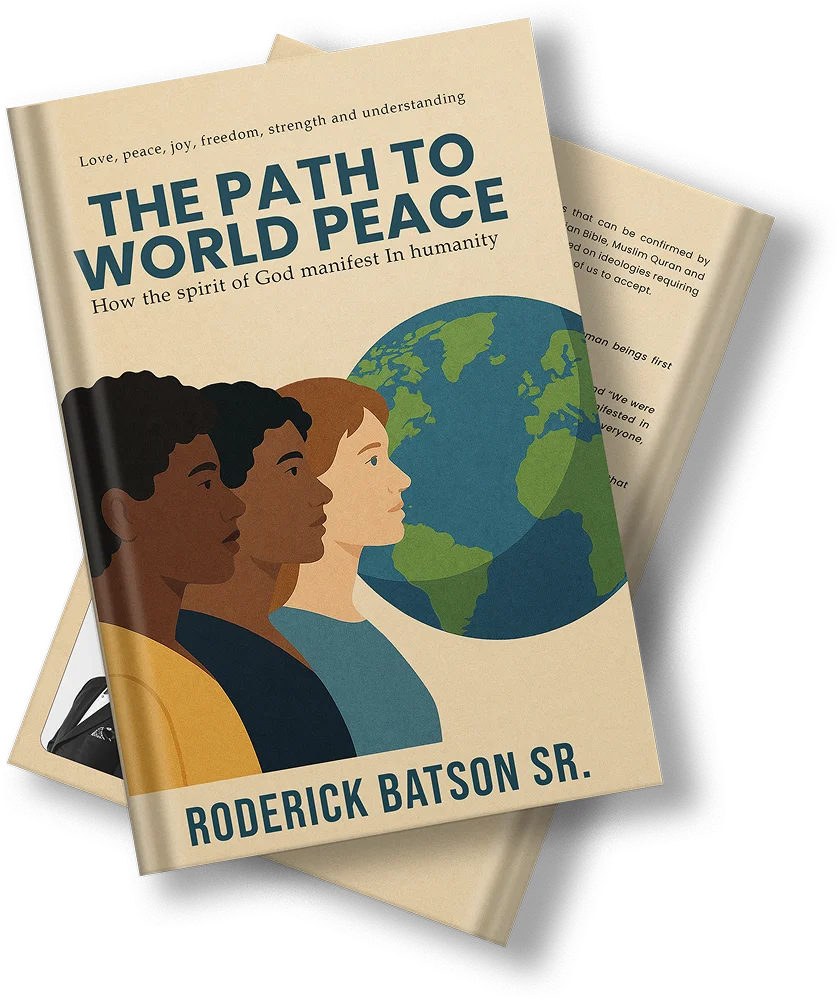
With so much information, wealth, and technology in the world, how can there be human suffering?
RODERICK BATSON SR offers a hard response in The Path to World Peace. A lot of the pain humans experience, he says, doesn’t start with God or nature. It is not; rather, it grows out of human choices, greed, fear, and separation.
When Suffering Becomes a Human Problem
The book does not treat suffering as one simple issue. Instead, it connects poverty, war, racism, violence, pollution, homelessness, and inequality.
However, that idea also gives you something important: responsibility. That challenge runs through nearly every chapter in the book.
Human choices can create pain. Better choices can also reduce it. The author links poverty, conflict, and environmental harm to human behavior and misused resources.
When Greed Turns Plenty Into Shortage
One of the book’s strongest arguments focuses on resources.
RODERICK BATSON SR believes the planet provides enough for people to survive and live well. Yet hunger and extreme poverty remain.
So the problem, in his view, lies less in what nature provides and more in how people control and divide those resources.
Some people go over their means, while others find it difficult to access food, shelter, safety and opportunity.
World Peace Begins With Human Choices
The book offers a clear view of human nature.
People can show care, courage, patience, and kindness. However, they can also learn hate, violence, and selfish behavior.
For example, a child raised with love may learn to show love. A child raised around abuse may begin to see harm as normal.
Still, learned behavior does not have to control your future. You can question it. Then you can choose a better response.
Humans Can Move in Two Directions
The book takes an interesting view of human nature.
People can show care, patience, courage, and generosity. However, they can also learn hatred, violence, prejudice, and selfishness.
A child raised around love may learn to give love. Meanwhile, a child surrounded by abuse may begin to see harmful behavior as normal.
You can notice what you learned, question it, and choose a different response.
When Belief Shows Up in Daily Life
In The Path to World Peace, spirituality moves beyond churches, mosques, temples, and sacred books. Author RODERICK BATSON SR brings it into everyday behavior.
Love appears when you help someone without expecting a reward. Peace appears when you avoid turning every disagreement into conflict. Strength appears when pain does not control your next decision.
You may not share another person’s religion, culture, or beliefs. However, learning why they think differently can reduce fear and hostility.
In the end, the message becomes practical. What matters most is how you treat people.
Why Is There Suffering in the World?
RODERICK BATSON SR argues that people often move away from the traits that could guide them. Greed replaces generosity. Violence replaces peace. Division replaces understanding.
Race, religion, nationality, politics, and class can separate people before they ever speak to one another.
The book asks you to reverse that order: see the human being first, then learn about the differences.
Responsibility Can Open a Path Toward World Peace
Linking human suffering to human behavior may sound harsh. Yet the idea also leaves room for hope.
You cannot control every leader, company, or nation. But you can control your own behavior.
You can choose to tell the truth or lie, to be nice or harsh, to be calm or angry.
Of course, small choices won’t solve all global problems at once. Still, the book argues that world peace must begin somewhere.
For the author, it begins with people.
Final Thoughts: The Answer Begins With Human Behavior
The Path to World Peace does not offer an easy villain. Instead, RODERICK BATSON SR asks you to examine human behavior itself.
The book connects suffering with greed, conflict, division, and the misuse of power. Yet it also offers another direction through love, peace, joy, freedom, strength, and understanding.
You may agree with some arguments and challenge others. But the essential message is still obvious. It starts with the choices people make. How they treat each other.