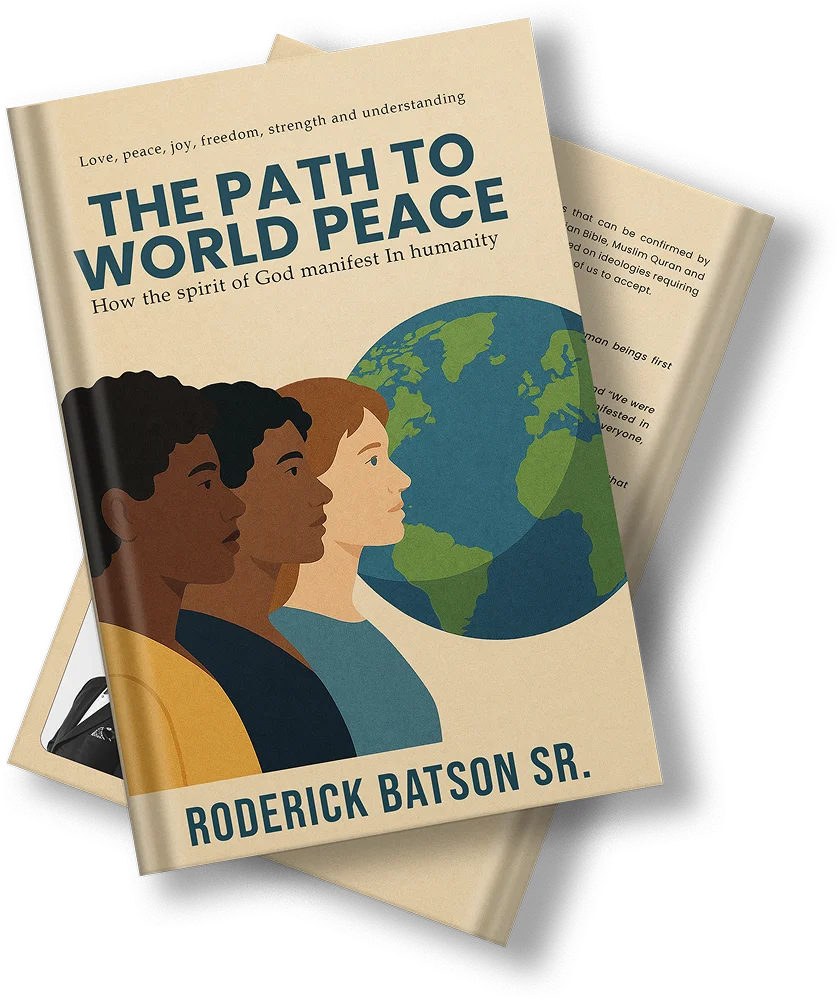
When Big Ideas Meet Daily Life
It often sounds distant. Yet the book keeps pulling it back toward daily life.
You are asked to think about love, peace, joy, freedom, strength, and understanding. In fact, RODERICK BATSON SR calls them Divine Traits. He treats them as tools you already carry.
So the question changes.
Instead of asking where goodness comes from, you begin asking how often you use it.
That shift gives the idea a practical edge. Ideas matter, but actions reveal what you believe.
Science and Spirituality Share the Same Room
It gets placed on opposite sides. Here, they sit at the same table.
The book begins with human senses, biology, nature, and the universe. It explores creation stories and religious thought. Rather than forcing one side to defeat the other, the author looks for shared ground.
Meanwhile, the human body becomes part of the argument.
People may look different outside. Yet the same systems keep every body alive. Therefore, the book pushes you toward a point about human equality.
Science and spirituality explain parts of life and also ask what you do with that life.
Human Nature Comes Before Labels
You collect labels from birth.
Nationality. Religion. Race. Language. Politics. Social class.
Yet author RODERICK BATSON SR asks you to place one fact before them: you are human.
Once that idea settles in, many divisions start looking smaller.
The book returns to human nature often. You can love, seek peace, experience joy, choose freedom, find strength, and deepen your understanding.
Because those traits cross borders, the author sees them as a spiritual bond shared by humanity.
Love, Peace, and Joy Become More Than Feelings
The chapters on love, peace, and joy move the discussion from theory into experience.
Love becomes action, not just affection. Peace becomes self-control, not simple silence. Joy becomes something deeper than a good mood.
For example, joy can remain through memory after someone dies. Peace can appear when anger would feel easier. Love can show up through forgiveness, support, and care.
So spirituality becomes visible through behavior.
You do not need a stage, title, or ritual to practice it.
Freedom and Strength Turn Inward
Freedom usually brings politics to mind. Strength often brings muscles to mind.
The book takes both ideas inward.
Freedom includes the right to think, choose, and pursue your own path. Strength appears when loss, pressure, fear, or pain tries to break you.
However, neither trait works alone.
Freedom needs understanding. Strength needs love. Peace needs self-control. Joy grows through service.
That connection gives the six Divine Traits a sense of movement. They support one another.
Understanding May Be the Bridge
Among all the traits, understanding may carry a wide reach.
Respect is born from an openness to learning. When you confront reality, you see better options and when differences are no longer seen as threats, peace becomes conceivable.
The book connects understanding with education, work, money, health, relationships, and social life. Learning, however, does not belong only in classrooms.
Curiosity, experience, and listening all shape the way you grow. As understanding deepens, fear often begins to lose its hold.
Final Thoughts: Philosophy You Can Practice
The Path to World Peace does not ask you to memorize a new system. Instead, it asks you to notice familiar qualities anew.
RODERICK BATSON SR brings these ideas together through one simple message: people have more in common than they often realize.
You may disagree with some arguments. You may question others. Yet the book keeps handing the conversation back to you.
How do you treat people?
What guides your choices?
Which traits appear when life becomes difficult?
World peace may sound enormous. Still, the book brings the first step down to one person, one choice, and one moment at a time.